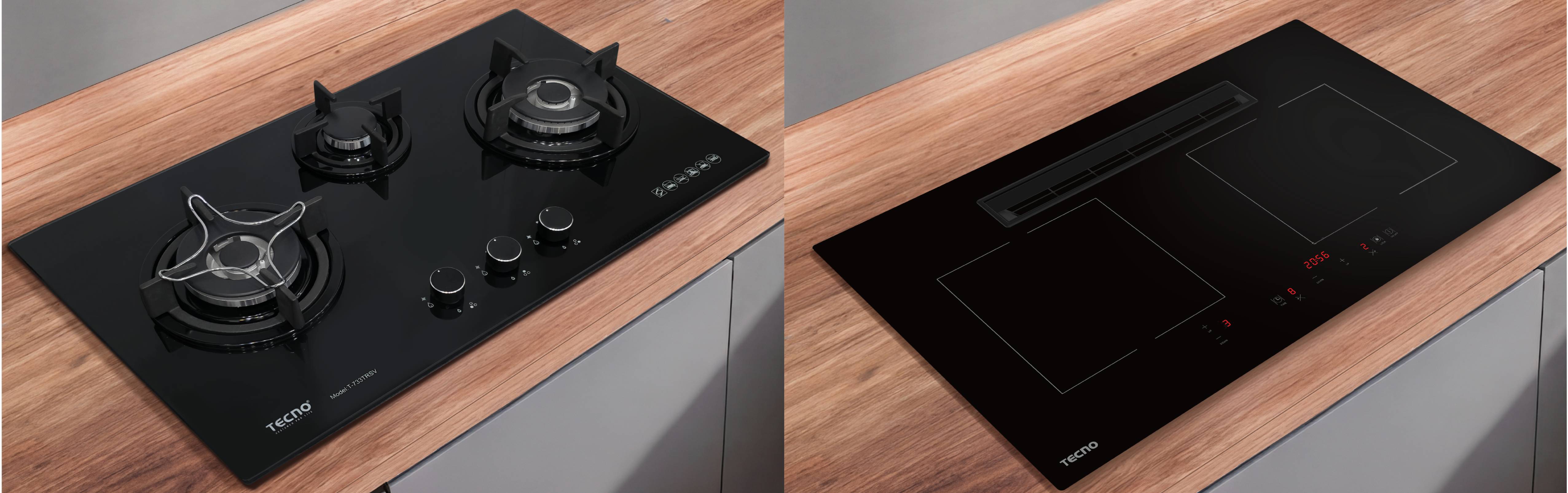
Whether you’re renovating your kitchen or replacing an old appliance, one of the most common decisions homeowners face is choosing between gas and induction hobs. From safety concerns to cooking preferences, the right appliance will make a big difference in your everyday life.
If you’re unsure which appliance suits you the best, you’ve come to the right place!
Quick Overview: Gas vs Induction Hob
Before diving deeper, here’s a quick overview of how gas and induction hobs differ:
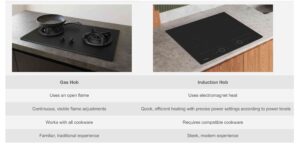
How Gas or Induction Hobs Works
Gas Hobs
Gas hobs use either piped town gas (PUB) or cylinder gas (LPG) to produce an open flame, providing a direct heat source that is favoured by many households.
When the gas is ignited, the flame will heat the base of the cookware that is placed above it, and the heat is transferred to the food inside. The size of the flame can be adjusted using control knobs, which regulates the amount of gas released.
The visible flame allows users to observe changes in heat intensity as they cook.
Induction Hobs
Induction Hobs use electromagnetic energy to generate heat, rather than relying on a flame or heated surface.
When switched on, the hob creates a magnetic field beneath the cooking zone. When compatible cookware is placed on the zone, this magnetic field induces heat directly onto the base of the cookware, heating up the food inside. This is also why cookware with a magnetic base (induction-compatible) is required
The heat can be controlled using touch or digital controls, which regulates the amount of energy supplied to the cookware. As there is no open flame, the surface around the cookware remains relatively cool during cooking. While the surface itself is not heated by an element, the reason why it might still feel warm is due to the residual heat being transferred from the hot cookware onto the hob surface.
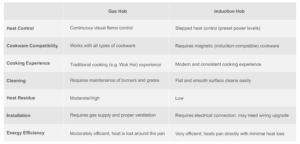
Key Differences between Gas and Induction Hobs
Pros and Cons of Gas vs Induction Hobs
Gas Hob
Advantages:
- Instant heat and precise flame control
- Compatible with any type of cookware
- Allows different cooking techniques and cookware
Disadvantages:
- Gas piping and proper installation required
- Requires dedicated care of its burners and grates
Tip! Using the right pan size that fits with the burner helps distribute heat evenly across the cooking surface, for a more even consistency as well as minimising energy waste!
Induction Hob
Advantages:
- No open flame and built-in safety features for optimal safety
- Heats food quickly to the desired temperature
- Easy to clean due to flat surface
Disadvantages:
- Compatible cookware is required (aluminum pans won’t work)
- Higher initial cost (appliance + possible installation + Electrical wiring)
- Faint humming or buzzing sounds at higher power levels
Tip! Use a metal adapter plate (also called an induction converter disk) to make non-compatible cookware usable on induction hobs.
Gas vs Induction Hob in Singapore: What to Consider
When choosing between gas or induction hobs in Singapore, it’s also important to consider these factors that are specific to your homes and kitchen setups:
- Existing Gas Infrastructure
Many HDB flats and condominiums come with built-in gas supply for easier installation of gas hobs. On the other hand, induction hobs rely entirely on your home’s electrical system, which may already be in place. If not, special consideration regarding the electrical system might be required, depending on your kitchen setup.
- Ventilation
Ventilation is an important consideration for many Singaporean homes.
Gas hobs produce heat and combustion byproducts. As such, it is recommended that it is placed in areas with proper ventilation.
Induction hobs on the other hand, do not produce an open flame and gas, making it suitable for enclosed and modern kitchen layouts.
- Cooking Styles
The right hob for you should complement your cooking style. While gas hobs are often preferred for its high heat range and suitability for various techniques (e.g. flame control) that benefits from a direct flame control, induction hobs are preferred for consistent and quick cooking. Consider how often you cook and the types of dishes you prepare to guide your decisions.
Which Hob is Better for You and Your Kitchen?
A gas hob is still a popular option amongst many, especially those who prefer traditional, hands-on cooking with a variety of cookware bases. The instant, visible heat allows more control over your flames. Unlike the induction hob, a gas hob provides flexibility with cookware and more freedom in different cooking techniques, suitable for those who prefer more control while cooking in the kitchen.
An induction hob might be a suitable option, if safety and convenience is something which you prioritise. Induction hobs come with a modern and easy-to-clean setup too, which aids in a fuss-free cleanup after every meal. They offer fast and efficient cooking, making it suitable for those of you who prefer a consistent and low maintenance cooking experience.
Finding the Right Balance: Hybrid Hobs
With that many different features to decide on, it may be a difficult decision to outright choose one single type of hob.
If you want the safety and convenience of the induction hob, alongside the control and familiarity of a gas hob, this is where the hybrid hob comes in. The hybrid hob combines both technologies into one setup, giving you the best of both worlds.

Featured Product: Tecno T788GI
If you’re exploring options that bring these benefits together, models like Tecno T788GI offer a sleek design with the best of both worlds. One side features a powerful gas burner with Variable Valve System (VVS), allowing the burner to double up for both the heaviest frying and the lightest simmering. The other side features an induction surface that delivers rapid and efficient heating up to 2000W.
Another all-electric hybrid option would be the Tecno TG 2883HB ceramic-induction combi hob. Here, you get the best of both worlds with the induction burner providing all its perks of speed and efficiency while the ceramic side allows the flexibility of using any cookware.
Recommended Picks
Gas Hobs
T 3388TGSV – 3-burner gas hobs for home chefs with bigger families cooking multiple dishes
T 22TGSV – Compact gas hobs for smaller kitchens without any compromise in performance
Induction Hobs
TIH-6238FFi – Fully spec’d up induction hob for budding chefs who wants performance and control
TIH 2882 – 13A plug-in model with no wiring required, ideal for all types of home cooks
TG 2883HB – Hybrid hob combining induction and ceramic cooking zones, offering flexible cooking with different cookware types
Final Thoughts
Whether you prefer the familiarity of gas or the precision of induction, selecting the right hob can enhance both your cooking experience and kitchen environment.
Explore our collection of gas hobs and induction hobs to find a model that best matches your needs.
FAQ: Choosing Between Gas or Induction
Q: Which hob is better for everyday cooking?
It depends on your cooking style and habits. If you enjoy hands-on cooking with quick heat control, gas hobs are well suited to your needs. If you prefer convenience and consistent results, induction hobs are often the better fit!
Q: Do I need special cookware for induction hobs?
Yes, cookware with a magnetic base (induction-compatible) is required.
Q: How do I check if my cookware is induction compatible?
Simply use a magnet and place it at the base of your cookware. If it sticks, the cookware is magnetic and will work.
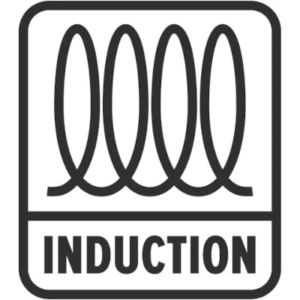 You may also check for the logo at the back of your cookware.
This coil logo on the pan means that the cookware is induction-compatible.
Q: Can I switch from gas to induction?
Yes, you can! If you decide to make the switch, our team can handle the removal of your existing gas hob, including safely capping and disposing of the gas hose. If you’re unsure if your kitchen setup is suitable, feel free to contact us +65 6552 3318.
Q: Will switching to induction increase my electricity bill?
It may slightly increase electricity usage, but induction is energy-efficient. Thus, overall cost will depend on your cooking habits and current gas vs electricity rates.