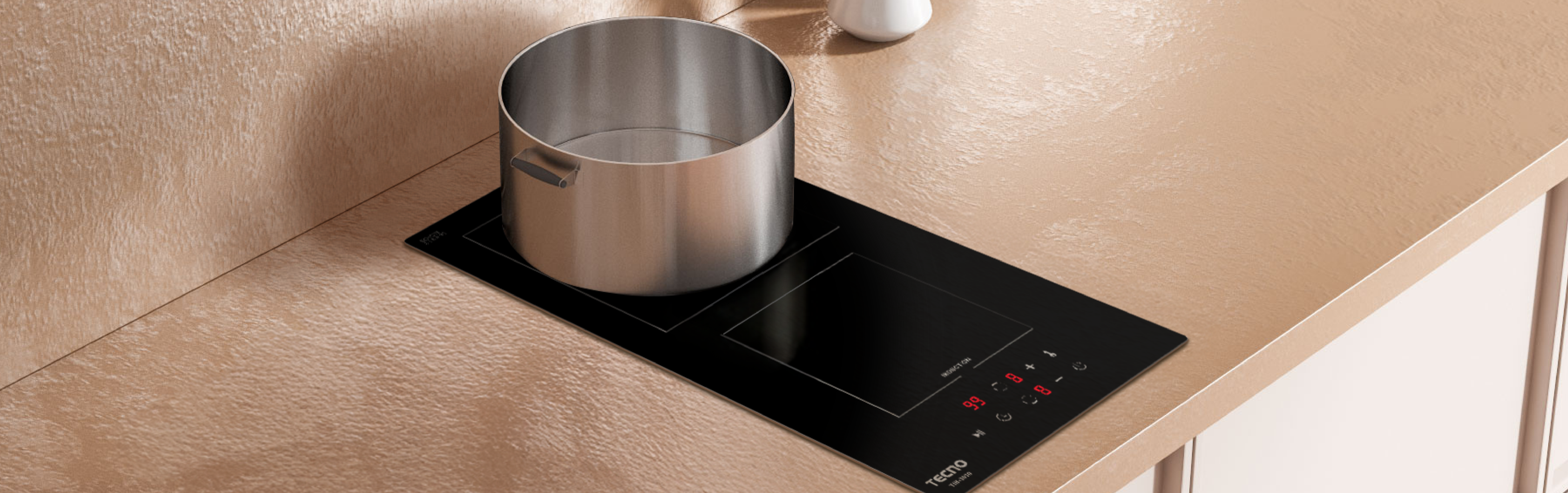
Choosing the right hob is an important decision for any kitchen. Whether you’re renovating your kitchen or planning a new setup, understanding what you’re looking for can help you find a hob that fits both your cooking style and your home.
This guide outlines the key features and considerations to keep in mind when selecting an induction hob.
Why Choose an Induction Hob?
Induction hobs are designed for modern cooking, offering a combination of speed, control, and convenience that suits fast-paced households. Unlike traditional methods, induction hobs heat the cookware directly, allowing meals to be prepared faster with less wasted energy.
They are highly precise and responsive, making it easier to manage different cooking techniques such as boiling and simmering. While they require compatible magnetic-based cookware, they deliver consistent results across a wide range of everyday cooking needs.
Key Features to Look Out For
Cooking zones and layouts
Induction hobs come in different configurations, typically with 2 to 5 cooking zones. With this feature, different sized cooking zones can accommodate a variety of cookware sizes. Smaller zones are commonly used for small and compact pans while larger zones provide higher heat and a more heat efficient zone for bigger pans.
Power settings and boost function
- Power Settings
Most induction hobs come with multiple power setting levels, allowing you to adjust heat precisely based on what you are cooking. Lower power setting levels are ideal for melting chocolate, simmering and braising, while higher settings levels are better for searing steaks/scallops or stir-frying and deep-frying.
- Boost Function
A boost function temporarily increases power for rapid heating when required. It delivers maximum output for a short period of time, which is useful for quick water boils or speeding up meal preparations.
Safety features
- Child Safety Lock
This feature prevents accidental activation of the hob by locking the control panel, ensuring that the hob cannot be switched on or adjusted unintentionally.
- Pan detection
This feature ensures that hob only activates when a compatible cookware is placed on the cooking zones. Otherwise, the hob will not heat up, improving safety and energy efficiency.
- Residual heat indicators
When the hob has been operating for some time, there will be residual heat. This feature helps users avoid accidental contact with the warm surface even after the hob has been turned off.
- Automatic shut-off
This feature automatically turns off the hob if it has been left on for an extended period of time, or after prolonged use, to help prevent overheating. On certain models, the panel automatically shuts off when water is detected, preventing accidental inputs during cooking.
- Cool-to-touch surfaces
Since heat is generated directly onto the cookware, the surrounding surface remains relatively cool during cooking, reducing the risks of burns.
Overall, these features in place help make the kitchen safer for everyone to use.
Control interface
- Touch Control
Touch control offers a clean and modern interface where heat levels can be easily adjusted with simple taps. They provide precise control over individual cooking zones, with many models including features such as timers and reminders for convenience.
- Slider Control
Slide control allows you to adjust heat levels by moving your fingers across a scale, enabling quick and intuitive temperature change. They provide rapid adjustment. Instead of repeatedly tapping the “+’ or “-” of a normal touch control, you can instantly slide your finger to the desired spot.
- Rotary Knob Control
Often found in older induction hob models, rotary knob control gives a more traditional and familiar control experience. These provide direct, tactile adjustment of heat levels, which can feel more intuitive for users who prefer a more hands-on cooking experience.
Surface material
- Ceramic Glass
The cooking surface of almost all induction hobs are made of ceramic glass, which is both durable and heat resistant. As induction hobs use magnetic fields beneath the ceramic glass to heat the cookware directly, ceramic glass are designed to withstand high temperature and rapid temperature changes.
Things to Consider Before Buying
- Kitchen installation setup
Other than requiring a suitable electrical setup to ensure safe operation. Proper ventilation beneath the hob is also important to allow heat to dissipate and prevent overheating when in use.
If your kitchen has a pre-installed hob (induction/gas), it is also important to ensure that the new induction hob you’re looking at, fits the cut out size of your current hob.
If you’re unsure if your kitchen setup is suitable, feel free to contact us at +65 6552 3318 for advice.
- Cookware compatibility
Induction hobs require magnetic-based cookware. For example, aluminum and glass will not heat up unless they have an induction compatible base as they are not magnetic.
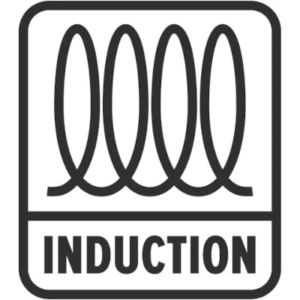
A simple way is to check for this induction coil logo at the back of the pan which means that it is induction compatible. Alternatively, you can check if a magnet sticks to the bottom of your pan. If your existing pots and pans are not compatible, you may need to purchase an induction converter disk.
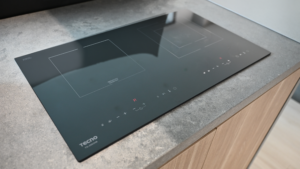
For added flexibility, some models combine both induction and vitro-ceramic cooking zones to accommodate the use of different types of cookware on the same hob. Tecno TG 2883HB hybrid hob is built with this configuration in mind for greater versatility in everyday use.
- Electrical requirements
Induction hobs require a stable electricity supply to function, where larger models with multiple zones may need higher power capacity. While some models are designed with a 13-amp plug-compatible option for easy installation, installation should still be carried out by a qualified technician to ensure safety and proper setup.
In Singapore, HDBs only typically support up to 15A power sockets. Induction hobs such as TIH 2882 are preferred as it comes in intelligent power sharing adaptable to 13 Amp (2800W). For condominiums and private housing, higher electricity capacities are usually available. This allows the use of more powerful induction hobs (such as the 4-Burner Induction Hob, TIH 648!) with greater wattage and multiple zones operating simultaneously, offering enhanced performance and flexibility for your every cooking need.
- Cooking preferences
If you’re used to gas cooking, it may feel awkward swapping to induction hobs due to the change in design and technologies. However, many users are able to adapt quickly due to its intuitive and precise controls where you are able to instantly switch from boiling to simmering soup without waiting for flame adjustments.
- Budget and features
While initial costs of installing an induction hob might be higher compared to traditional gas hobs, the features provided adds efficiency, precision and convenience over time. Basic models may include standard cooking zones and controls, while higher-end models may feature flexible zones, boost functions, and advanced safety systems.
Meet our Newest Hob Addition
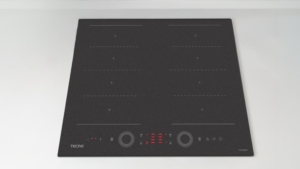
We are proud to introduce the latest addition to the range of our induction hobs – the TIH-6238FFi! Designed for hassle-free and convenience, suitable for quick weeknight meals or slow and easy weekend cooking.
Key New Features
- Flexizone (Flexible Bridge Zone)
This feature allows you to use one zone for your small pans, or combine two or more zones into one larger area, which is ideal for oversized pans and grill trays.
- iMove (Slide Moving Control)
This feature allows the heat level to adjust automatically when the cookware is moved across different zones of the hob.
While this induction hob’s comes with a default 13 Amp (2800W), it is adaptable to 15 Amp (3500W), 20 Amp (4600W) or 32 Amp (7200W).
Final Thoughts
An induction hob offers a modern and efficient way of cooking, making it a very strong choice for modern kitchens. It is designed to simplify everyday cooking while improving overall convenience through features such as fast heating and easy cleaning. When choosing a model, it is important to consider the different factors such as cookware compatibility or electricity requirements.
Ultimately, the right hob depends on your lifestyle and kitchen style. By understanding the key features and considerations, you can make a more informed decision that fits into your life.
If you’re still deciding between induction or gas hobs, it can be helpful to compare both options side by side. Explore our Gas or Induction: What’s the Real Difference? guide for a clearer breakdown of the differences.
You can also take a closer look at the alternative, in our Gas Hob Buying Guide, where we will explore its key features and considerations in detail.